
How Weather Affects Your Locks in Maryland
From freezing winters to humid summers, Maryland’s climate can take a toll on your home’s locks. Extreme temperature swings, moisture, and seasonal conditions often cause locks to jam, corrode, or become difficult to turn. Understanding how weather impacts your door hardware — and knowing how to maintain it — helps you avoid costly repairs and inconvenient lockouts. Here’s a detailed guide to how Maryland weather affects your locks and how to keep them working smoothly year-round.
Why Weather Impacts Locks
Locks are mechanical devices made of metal components that expand, contract, or corrode when exposed to temperature changes and moisture. Over time, these environmental effects lead to stiffness, misalignment, or even total lock failure. Because Maryland experiences all four seasons, homeowners must deal with both freezing and humidity-related lock issues throughout the year.
Understanding these effects helps you stay proactive with simple maintenance that protects your locks from damage caused by the local climate.
Winter: Frozen Locks and Key Jamming
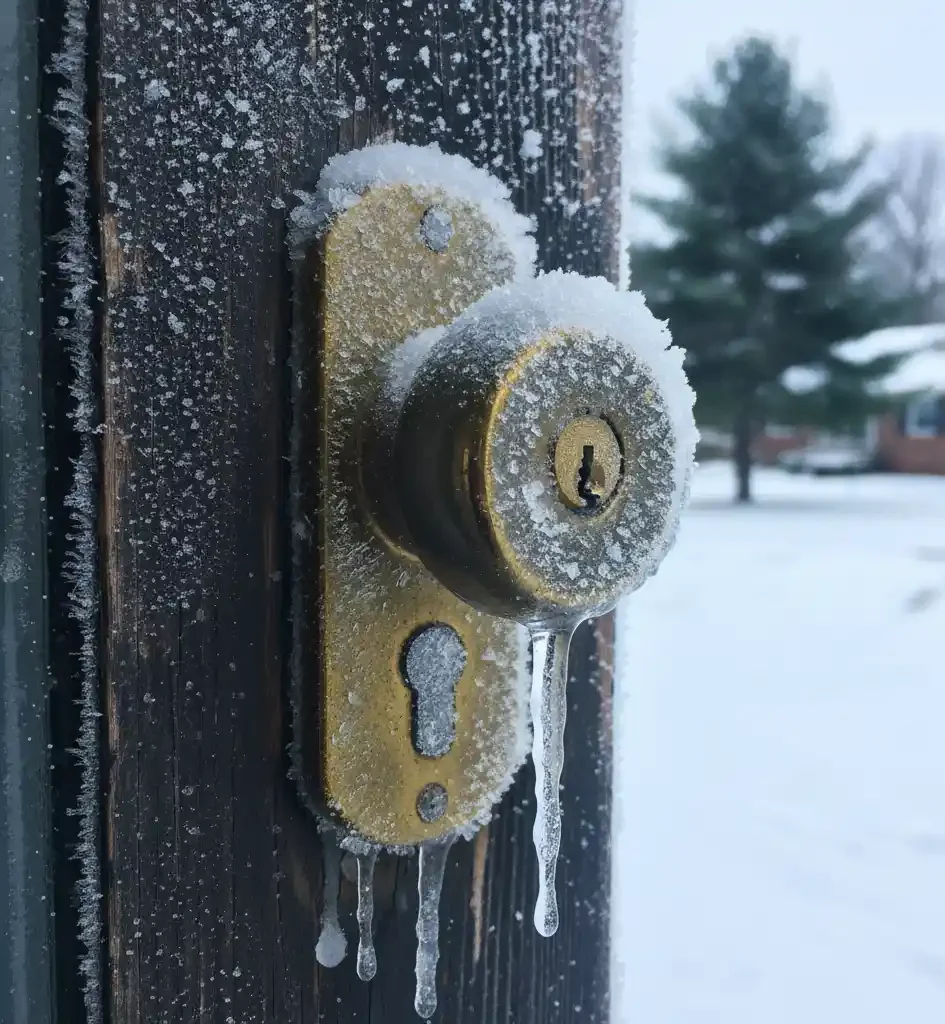
When temperatures drop below freezing, moisture inside or around the lock can freeze, causing the internal components to seize up. This is one of the most common seasonal problems for Maryland homeowners, especially in areas like Frederick, Baltimore, and Montgomery County where cold snaps are frequent.
Common winter-related lock issues include:
- Frozen locks: Water condensation inside the cylinder solidifies, preventing the key from turning.
- Stiff mechanisms: Metal parts contract in cold weather, creating friction and resistance.
- Broken keys: Excessive force applied to a stiff lock can snap keys inside the cylinder.
Prevention tips:
- Use a graphite-based or silicone lock lubricant before winter begins.
- Keep locks covered or sheltered from snow and freezing rain.
- Avoid pouring hot water into locks — it temporarily melts ice but creates condensation that refreezes later.
- Use de-icer sprays designed for locks if freezing occurs.
If your key breaks or the lock won’t budge, call a professional locksmith rather than forcing it — this prevents further damage to your door hardware.
Spring: Moisture and Rust Build-Up
Spring in Maryland brings rain and humidity, which can lead to corrosion. Moisture gradually seeps into exterior locks, especially those exposed to the elements, and promotes rust formation inside the cylinder and around the latch.
Signs of moisture damage include:
- Keys feeling gritty or rough when turning
- Locks appearing discolored or stained with rust
- Sluggish lock operation or sticky mechanisms
How to prevent corrosion:
- Apply a weather-resistant lock lubricant to create a protective barrier against moisture.
- Install weatherstripping or door sweeps to keep rain and humidity from entering.
- Consider upgrading exterior locks to stainless steel or brass, which resist corrosion better than cheaper metals.
Regular lock maintenance each spring keeps moisture from building up and extends your hardware’s lifespan.
Summer: Heat and Humidity Expansion Problems
High temperatures and humidity are another challenge for Maryland homeowners — especially in July and August. Warm, moist air causes metal expansion and wooden doors to swell, leading to misalignment between the lock and strike plate. This makes locks feel tight or unresponsive.
Common summer issues include:
- Keys that stick or won’t insert fully
- Doors that need extra force to close or latch
- Electronic locks malfunctioning due to heat-related component stress
Prevention and maintenance tips:
- Check door alignment monthly and tighten loose hinge screws.
- Lubricate locks lightly every 6–8 weeks to prevent binding.
- Use a dehumidifier or air conditioning near entryways in extremely humid areas.
- Keep smart lock batteries out of direct sunlight or heat exposure.
Humidity also increases the risk of key corrosion, so keeping locks clean and dry is essential for long-term performance.
Fall: Temperature Fluctuations and Debris
Autumn is a transition season in Maryland — cooler temperatures, falling leaves, and fluctuating humidity levels can all impact your locks. Dust, dirt, and organic debris often accumulate in lock cylinders during this time of year, causing stiffness or misalignment.
Tips for fall lock care:
- Clean lock cylinders with compressed air or a cotton swab to remove dust.
- Inspect weather seals and door frames before winter arrives.
- Have your locks inspected by a residential locksmith before the cold season for proactive maintenance.
Performing preventive maintenance in fall prepares your locks to handle winter’s freezing temperatures without issue.
How Humidity Affects Smart Locks and Keypads
Maryland homeowners increasingly rely on smart locks and electronic keypads — but these devices are just as vulnerable to the weather as mechanical locks. Excessive humidity can cause condensation inside the housing, leading to short circuits, stuck buttons, or delayed response times.
To protect your smart lock system:
- Ensure it’s rated for exterior use and weather-sealed.
- Replace batteries every 6–12 months to prevent corrosion on contacts.
- Clean the keypad and sensors periodically with a dry microfiber cloth.
- Install a small awning or weather guard over exterior keypads.
Regular inspections keep your smart lock working smoothly through Maryland’s seasonal humidity and temperature swings.
Materials That Withstand Maryland Weather Best
Not all locks are designed for every climate. In humid or coastal parts of Maryland — such as Annapolis or Chesapeake Bay areas — corrosion resistance is a must. When choosing locks, consider these durable materials:
- Stainless steel: Highly resistant to corrosion and ideal for coastal or humid regions.
- Solid brass: Long-lasting and rust-resistant, perfect for exterior doors.
- Zinc alloy: Affordable and moderately corrosion-resistant, suitable for interior use.
- Nickel-plated finishes: Add an extra layer of protection against tarnish.
A professional locksmith can help you select lock materials that fit your home’s exposure level and aesthetic style while offering reliable security.
Seasonal Maintenance Checklist for Maryland Homeowners
Regular lock maintenance doesn’t take much time — and it can save you from expensive replacements later. Here’s a simple seasonal checklist:
- Winter: Lubricate locks before freezing weather. Use de-icer if needed.
- Spring: Clean and inspect locks for rust. Reapply protective lubricant.
- Summer: Check door alignment and tighten screws. Prevent humidity buildup.
- Fall: Remove dirt and debris. Schedule a professional inspection.
Keeping up with this routine ensures smooth lock operation in every season and extends your hardware’s life by years.
When to Call a Professional Locksmith
Some lock issues require expert help, especially if your key sticks, the latch doesn’t align, or the lock feels unusually stiff. For Maryland homeowners, calling a local locksmith ensures your locks are serviced properly and weather-proofed for the upcoming season.
Professional locksmiths can:
- Clean and lubricate locks safely with non-damaging products
- Adjust door alignment to fix humidity or heat-related sticking
- Repair or replace locks damaged by rust, corrosion, or freezing
- Recommend long-term upgrades for improved durability
Working with an experienced locksmith helps you prevent seasonal damage rather than just react to it.
FAQs
Q: How can I keep my locks from freezing in Maryland winters?
A: Apply a silicone or graphite-based lubricant before winter, and avoid using water-based de-icers that cause re-freezing.
Q: Are smart locks affected by humidity?
A: Yes. Excess moisture can cause internal corrosion or battery failure. Use weather-rated smart locks for outdoor use.
Q: Why do my doors swell and make the locks tight in summer?
A: High humidity causes wood doors to expand, misaligning the lock and strike plate. Adjust hinges or use a dehumidifier to balance moisture.
Q: Should I lubricate my locks regularly?
A: Yes. Lubricate every six months or at the start of each major season to prevent rust and stiffness.
Q: What’s the best lubricant for door locks?
A: Use graphite powder or silicone-based sprays — avoid oil-based lubricants that attract dirt and dust.
Summary
Maryland’s ever-changing weather can affect how your locks perform — from freezing winters to humid summers. With the right maintenance and seasonal care, you can prevent most issues before they happen. Whether you need lock repair, rekeying, or smart lock installation, Pro Mobile Locksmith is here to help Maryland homeowners keep their doors working smoothly and securely all year long.
Need a Reliable Locksmith?
Protect your home’s locks from Maryland’s unpredictable weather with expert help from Pro Mobile Locksmith. Call (301) 804-2201 or visit our contact page to schedule seasonal maintenance or repair service. We’re open 7 days a week and proudly serve homeowners across Montgomery County, Prince George’s County, and surrounding Maryland communities.