
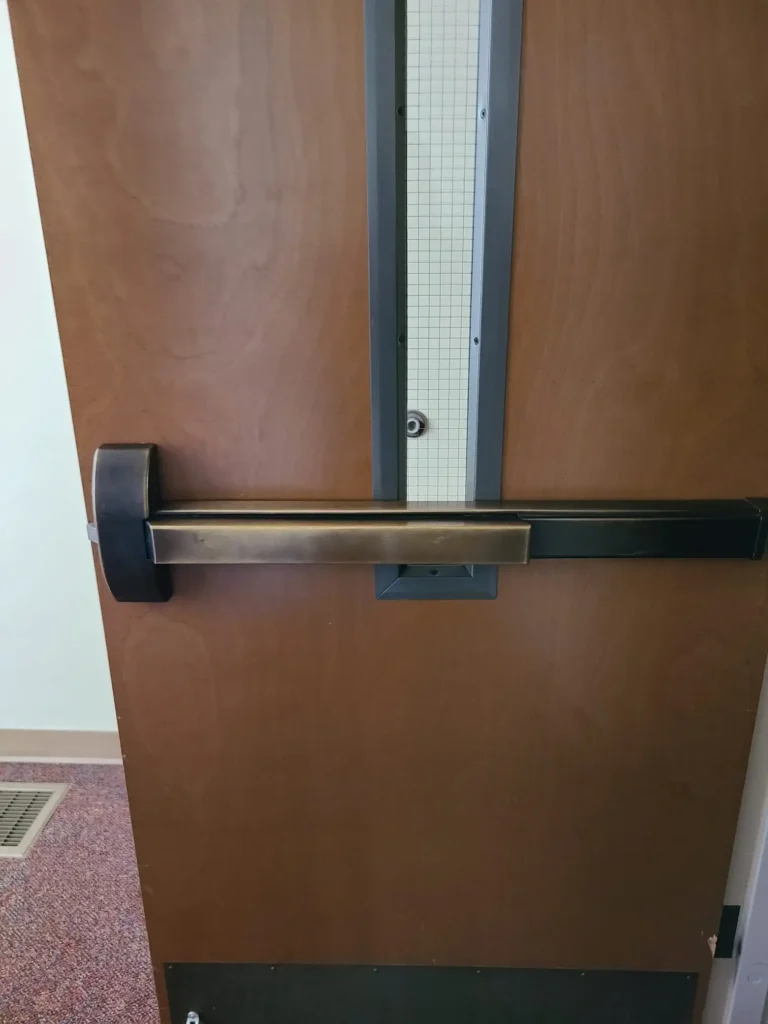
Panic Bars and Exit Devices: Keeping Maryland Workplaces Safe
In any Maryland workplace, safety is non-negotiable — and one of the most important yet overlooked features is the panic bar, also known as an exit device. These hardware components aren’t just convenient; they’re often required by law to ensure employees and customers can exit quickly during an emergency. Whether you manage an office, retail store, or commercial facility, understanding how panic bars work — and what building codes require — is essential for compliance and peace of mind. Here’s everything Maryland business owners need to know about panic bars and exit devices.
What Are Panic Bars and Exit Devices?
A panic bar (also called a crash bar or push bar) is a horizontal spring-loaded mechanism mounted on the interior side of a door. When pushed, it unlatches the door instantly, allowing quick egress even if someone is panicking, injured, or carrying items.
There are several common types of exit devices used in Maryland workplaces:
- Rim exit devices: Surface-mounted models commonly used on single doors.
- Mortise exit devices: Installed inside the door, offering a cleaner aesthetic and high durability.
- Vertical rod exit devices: Suitable for double doors or large entryways, securing both the top and bottom.
- Concealed vertical rod devices: Hidden within the door frame for a streamlined appearance.
No matter the type, their purpose is the same — to allow occupants to exit safely and efficiently during an emergency.
Why Panic Bars Are Legally Required in Many Maryland Buildings
Panic bars aren’t just a best practice — they’re part of federal and state building safety codes. The International Building Code (IBC), NFPA 101 Life Safety Code, and OSHA regulations all include provisions that require panic hardware in specific commercial settings. Maryland follows these standards closely through its statewide building code enforcement.
Panic bars are generally required on:
- Doors serving assembly areas with 50+ occupants (e.g., restaurants, schools, theaters)
- High-hazard areas or manufacturing facilities
- Public buildings such as offices, medical centers, and retail spaces
- Any door along an emergency exit route that locks from the inside
These codes ensure that even under high stress — such as during a fire or evacuation — occupants can exit quickly without fumbling with knobs, latches, or keys. Failure to comply can lead to fines, insurance issues, or even closure orders during inspections.
Key Benefits of Installing Panic Bars
Beyond meeting legal requirements, panic bars offer numerous advantages for Maryland businesses:
- Enhanced safety: Quick, keyless exit reduces the risk of injury during emergencies.
- Improved compliance: Meets OSHA and ADA accessibility standards.
- Durability: Commercial-grade construction designed for heavy use and longevity.
- Security balance: Can be paired with alarm systems or controlled re-entry mechanisms.
- Insurance advantages: Proper exit devices may reduce liability risks and improve safety audits.
For Maryland workplaces, especially those with multiple employees or public foot traffic, panic bars are an affordable investment that improves both safety and compliance.
How Panic Bars Work During an Emergency
When panic strikes, people naturally push forward. Panic bars use that motion to unlatch the door instantly. They require minimal effort and no special training to operate, which is crucial in chaotic or low-visibility situations.
Most panic bars also integrate with door closers and fire-rated assemblies, ensuring the door re-latches after use to maintain building security. In Maryland’s multi-tenant office buildings, they’re often connected to alarm systems that alert management or security teams when an emergency exit is used.
ADA and Accessibility Requirements
Panic bars also help Maryland businesses meet ADA accessibility requirements. The ADA mandates that exit devices must be operable with one hand, without tight grasping, pinching, or twisting of the wrist. The maximum force to activate the bar should not exceed five pounds.
When installed correctly, panic bars ensure that individuals with disabilities or limited mobility can exit the building safely, making them a crucial part of inclusive building design.
Fire-Rated and Alarm-Integrated Options
Many panic bars are designed to comply with both fire safety and security standards. Fire-rated exit devices are tested to withstand extreme heat for a specific duration, maintaining egress functionality during emergencies. Others can be integrated with alarm systems to deter unauthorized use while preserving quick exit capability.
Common configurations include:
- Fire-rated panic bars: Used on doors along designated fire escape routes.
- Alarmed exit devices: Emit a loud sound when opened to prevent misuse.
- Delayed egress systems: Allow controlled exit (e.g., after 15 seconds), ideal for retail or healthcare facilities.
Choosing the right configuration depends on your building’s layout, occupancy level, and security needs — areas where a professional commercial locksmith can offer expert guidance.
Code Compliance in Maryland
Compliance with Maryland’s building and fire codes is essential for every business owner. Most panic hardware installations must meet standards set by the Maryland State Fire Marshal and local jurisdictions. This includes correct mounting height, proper labeling, and certification from recognized testing laboratories such as UL (Underwriters Laboratories).
Key compliance factors include:
- Mounting height between 34–48 inches from the floor
- Clear door width of at least 32 inches
- Latch bolt retraction force under 15 pounds
- Proper alignment with exit signage and emergency lighting
Non-compliance can result in fines or mandatory re-inspections, so always use a certified locksmith familiar with Maryland’s commercial code requirements.
Choosing the Right Panic Hardware for Your Business
Every commercial property has different needs. When selecting panic hardware, consider factors like building size, door material, and security requirements.
Here’s a quick guide to selecting the right device:
- For offices or schools: Use quiet latch or concealed devices to minimize noise.
- For retail or public spaces: Choose alarmed exit devices to prevent unauthorized access.
- For industrial or warehouse settings: Opt for heavy-duty, fire-rated devices that comply with high-traffic durability standards.
Your locksmith can recommend panic bars compatible with existing door frames and integrate them with your access control system for seamless security management.
Professional Installation and Maintenance
Proper installation is key to both safety and compliance. Even high-quality panic bars can fail if not mounted or calibrated correctly. Professional locksmiths ensure correct placement, secure fastening, and alignment with door closers and alarm connections.
Routine maintenance is equally important. Over time, springs and latch mechanisms wear out, especially in high-traffic environments. Schedule annual inspections to ensure consistent operation, smooth latch retraction, and compliance with updated codes.
Common Mistakes to Avoid
Even well-intentioned business owners can make installation or usage errors that compromise safety. Avoid these common pitfalls:
- Installing residential-grade hardware on commercial doors
- Using key locks or chains that obstruct panic bars
- Ignoring ADA height and force requirements
- Failing to maintain panic bars after years of use
- Not labeling or lighting emergency exits properly
These oversights can lead to compliance violations or worse — failed exits during emergencies. Always work with licensed professionals to ensure every door meets both function and code standards.
How Locksmiths Help with Panic Bar Compliance
Certified locksmiths play a vital role in ensuring that panic bars and exit devices meet legal and operational standards. A Maryland locksmith can:
- Inspect your building for required exits and safety hardware
- Recommend and install the right type of panic device for each door
- Ensure hardware meets ADA and fire rating standards
- Integrate panic bars with alarm or access control systems
- Provide ongoing testing and maintenance for continued compliance
Partnering with a trusted locksmith ensures peace of mind and avoids the headaches of failed inspections or unsafe conditions.
FAQs
Q: Are panic bars required for all commercial buildings in Maryland?
A: Not all, but most assembly, educational, and high-occupancy facilities must have them on designated exit routes as per local fire and building codes.
Q: Can panic bars be installed on glass doors?
A: Yes. Specialized models are available for glass storefronts, maintaining both safety and aesthetics.
Q: Do panic bars affect building security?
A: No. They’re designed for one-way egress — keeping people safe inside while maintaining exterior security.
Q: How often should panic bars be inspected?
A: At least once a year, or more frequently for high-traffic or public-use facilities.
Q: Can panic bars be connected to alarms or access systems?
A: Yes. Many models integrate seamlessly with electronic locks, fire alarms, and security systems for added protection.
Summary
Panic bars and exit devices are more than just door hardware — they’re life-saving safety features that every Maryland business must take seriously. Installing the right panic hardware ensures your building meets code requirements while protecting employees and customers in an emergency. Pro Mobile Locksmith provides expert panic bar installation, inspection, and maintenance across Maryland to help businesses stay compliant, secure, and prepared for any situation.
Need a Reliable Locksmith?
Ensure your Maryland workplace meets safety and compliance standards with professional panic bar installation. Call (301) 804-2201 or visit our contact page to schedule an inspection. Pro Mobile Locksmith is open 7 days a week and proudly serves commercial clients across Maryland, DC, and Northern Virginia with code-compliant panic hardware and door safety solutions.